
The idea
Pemberton & Crane, full-service communications since 1994. The agency sells billable time, the way Dunder Mifflin sells paper in “The Office.” It hasn’t noticed yet that this very time is getting cheap. Talia starts work there.
The machine’s first draft was a friendly 60-second spot with no point of view. Four minutes later the premise that carries the episode was in place. My next message was a single question: Where are the good gags?
The room
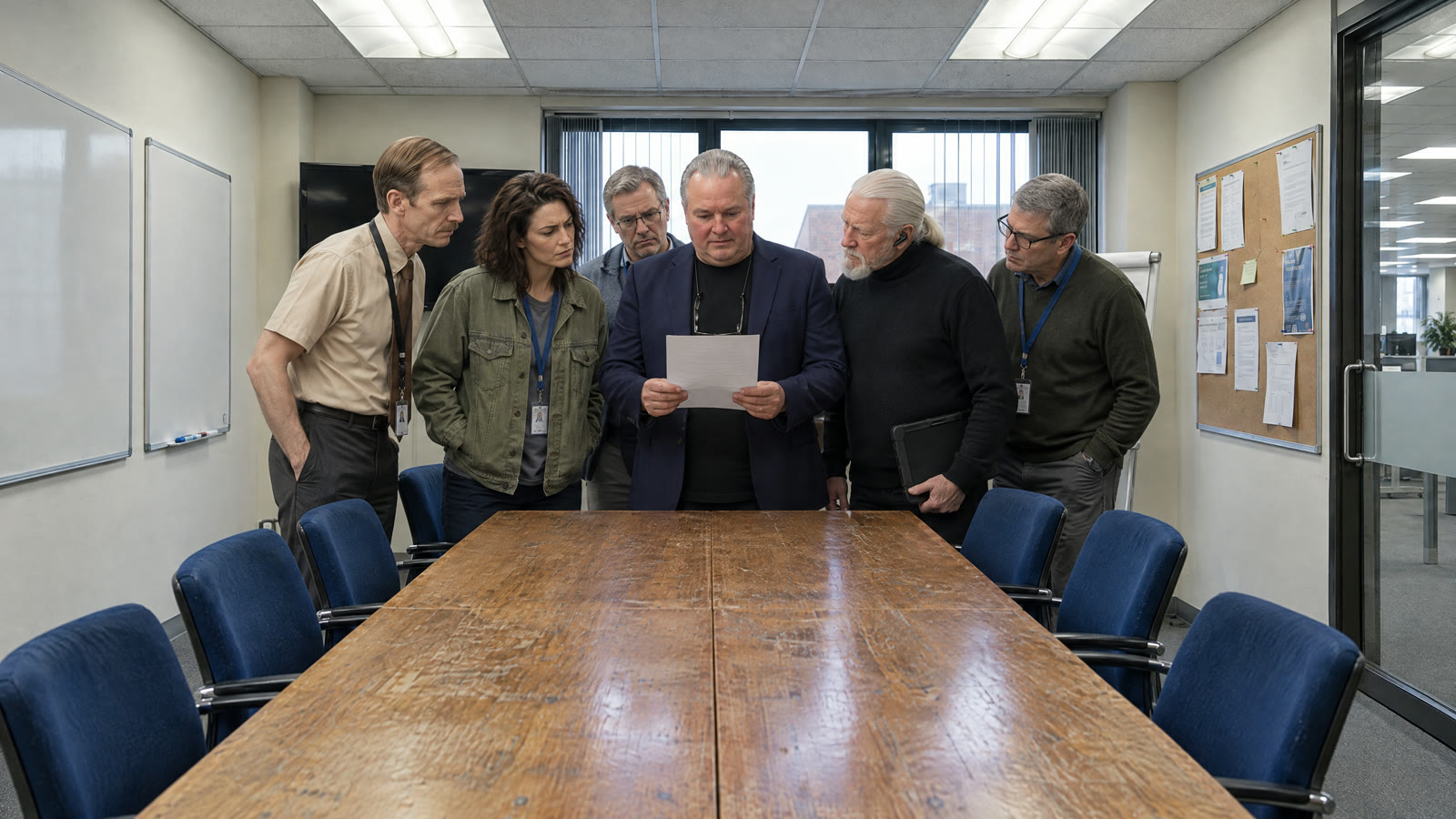
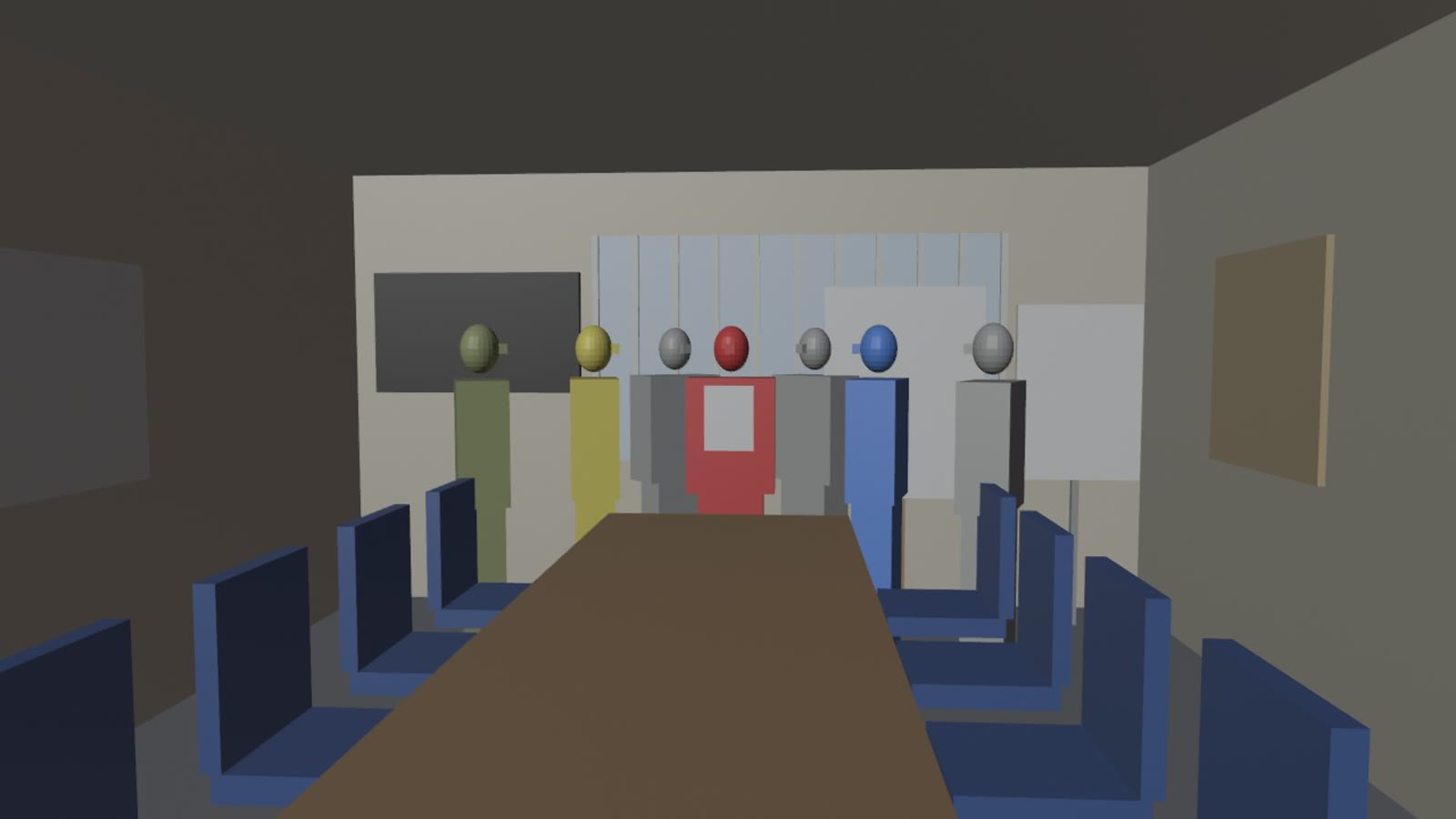
Anyone who works with image models learns quickly: every image reinvents the room. The door is on the left, then on the right, then gone. For a film, that is fatal.
The fix came from the theater. Before an image exists, the room is built in 3D, with colored dummies where the characters stand and one camera per shot. Only then does the image model paint people, light and surfaces onto that gray frame. On the first try, nine out of nine shots stayed in the same room.
What it cost
Episode and making-of together: the machine computed for about fifteen and a half hours. It was my turn for a little over five and a half, measured as the time the machine spent waiting for me. On top of that comes viewing time that no log captures: watching clips, listening to cuts. I add a flat 50 percent for it, which makes eight and a half hours.
In money: images and video took just over 2,000 credits, about €85. The directing assistant ran on my Claude subscription: 1.77 billion tokens, 96 percent of them cache reads. As a share of the weekly quota, that is about €15. Billed through the API, the same tokens would have cost about €760.
The number that matters is a different one: only 37 percent of the image and video credits ended up in what you see in the film. The rest went into rework, dead ends and rejects.
The machine produces a lot. What you pay for is the sorting.
What the machine couldn’t do
It swallows number words in fast sentences. Talia, in her early thirties, looked mid-forties in several shots. A tool for swapping voices after the fact sounded so bad that I cut it after one listen. The characters now speak with the voices the clips were made with.
And there are moments you see and can’t unsee: a character speaks, the mouth stays shut. Those go, even from the outtakes.
What I take away
A half-hour episode would be doable this way in three to six weeks. The bottleneck is neither compute nor credits. It is the time a human spends looking and deciding.
For Pemberton & Crane, that is bad news. Production gets cheap. Judgment stays expensive.
What this means for an organization
Strategy. Pemberton & Crane sells hours. Episode and making-of together cost about €100 and eight and a half hours of my time. Against numbers like these, the hourly rate no longer holds. What can still be sold is judgment: which idea, which version, which punchline. An agency that keeps billing hours is billing for a business that is disappearing.
Role. Curating becomes core work. Only 37 percent of the image and video credits made it into the film. Someone has to be allowed to throw things out without it counting as waste.
Process. Approvals become more frequent and smaller. 39 messages steered this film: briefs, corrections, approvals. An organization has to settle who approves. Otherwise, in the end, the machine approves, by silence.
What stays human. Looking and deciding. That is the bottleneck, neither compute nor credits. Whoever does it in an organization needs time for it in the calendar and the right to say no.