The idea
What if the great figures of history had already had someone sitting next to them, talking about personal brand, legend and signature move?
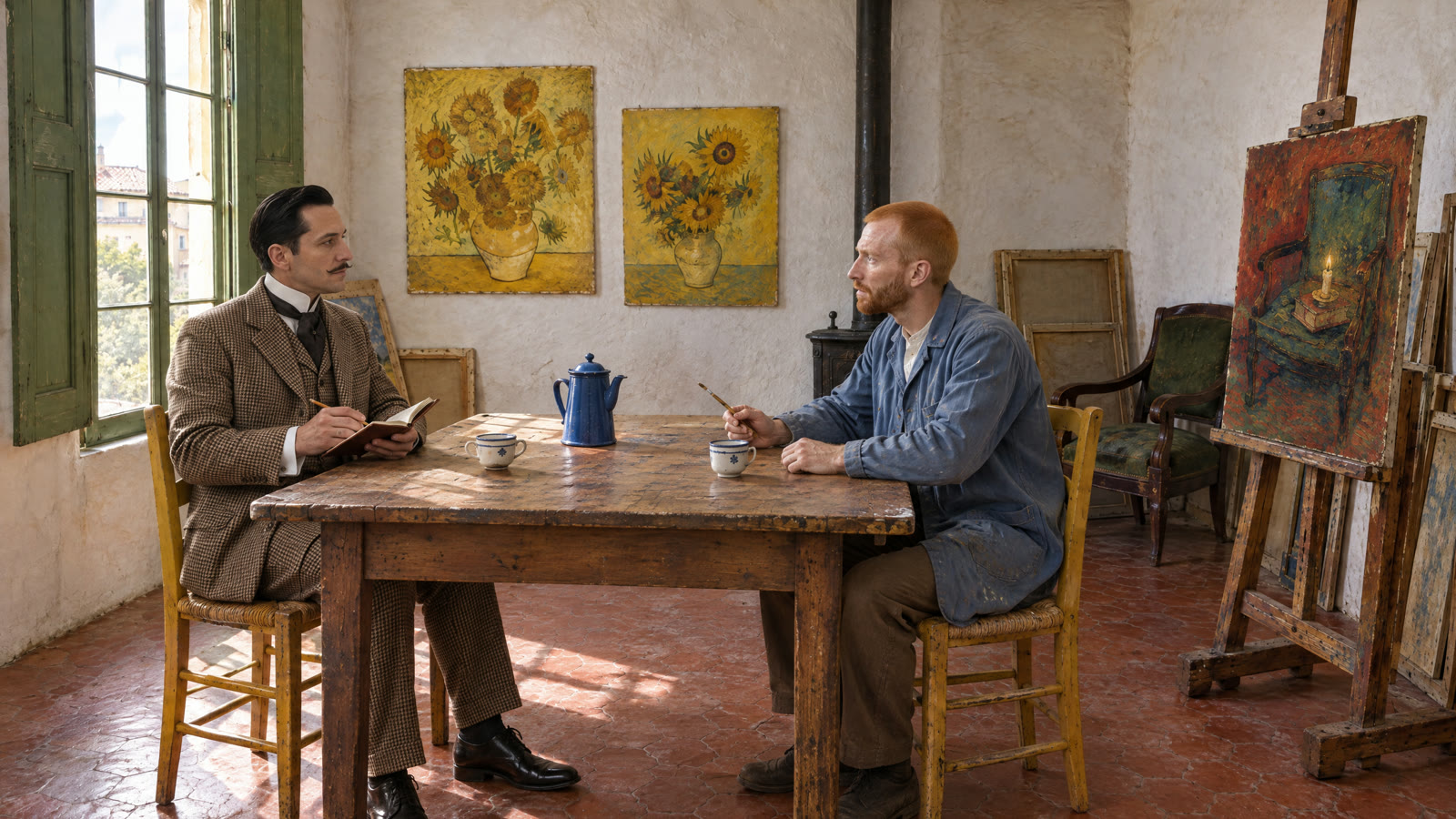
Arles, December 1888. Vincent has painted hundreds of pictures and sold next to none. His manager, Maurice Bréval, has a strategy, a notebook and, in the end, one single question. You can guess which.
Mockumentary, deadpan. Nobody laughs. Everyone means it.
The voice track that didn’t make the cut
The plan was clean: sound first, then picture. All 32 lines of dialogue were produced with synthetic voices, four takes each, edited and leveled. Then I threw the track out.
The voices now come straight from the image. The video model generates face, lips and voice in one pass. That gives the script a new rule: as much as possible has to happen in a single take. Dialogue, gestures and camera moves run in the same clip, fifteen seconds at most.
The music is a short piece for the title and the closer, composed with Suno. The chord lands on the cut.
One room, three zones
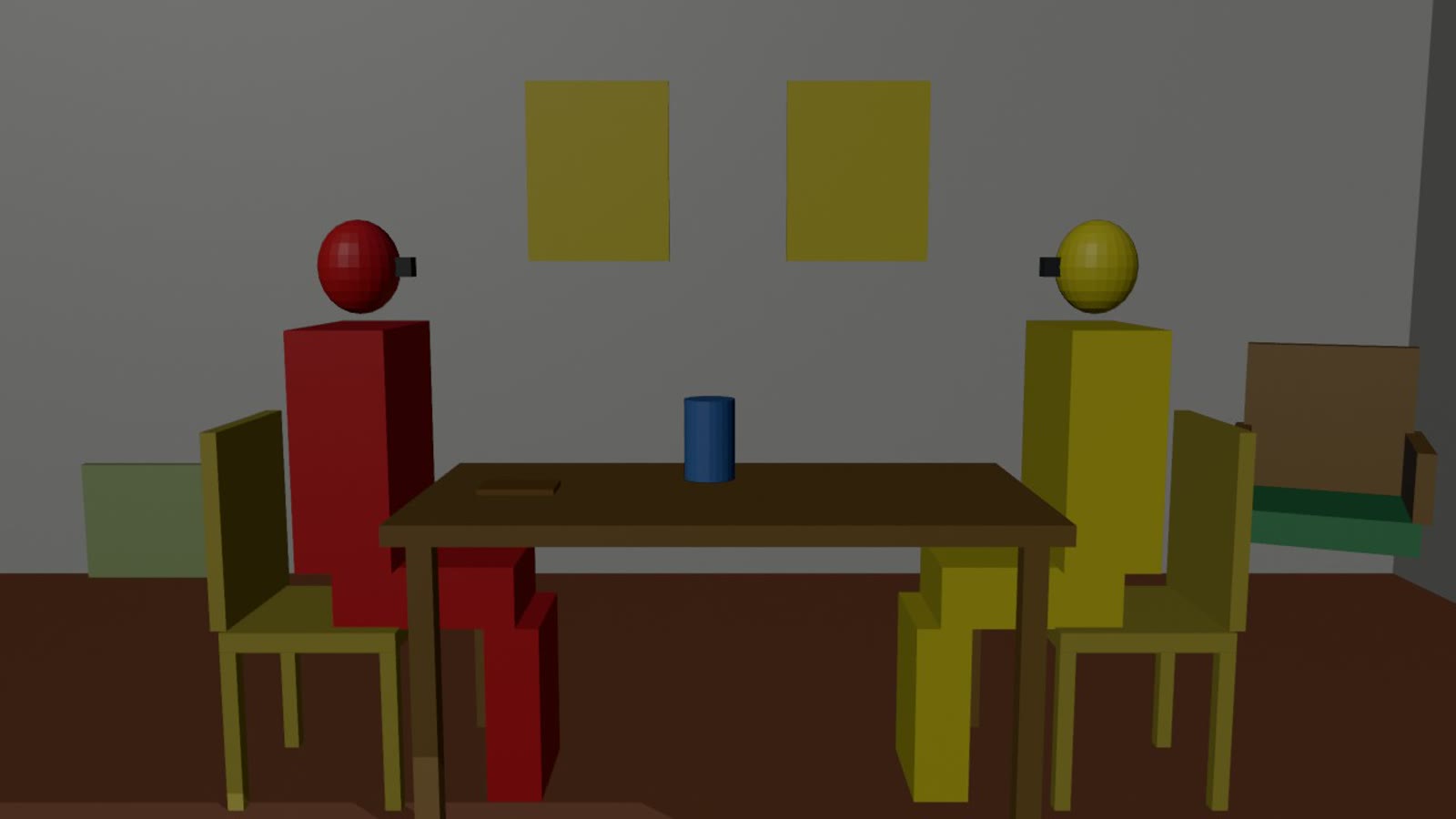
What I brought over from THE AGENCY: room first, then image. The Yellow House in Arles exists here exactly once, as a 3D model with three zones: table, window, armchair. Every interior scene plays in it.
Five mistakes, fixed in the edit
A swallowed “Vincent.” Two sentences cut off at the end of a clip. A look into the camera that wasn’t supposed to be one. And a painted candle in the background that suddenly started to flicker.
I regenerated none of it. The rule: if a take misses the text, I check the edit first and adapt the script to the take. A reshoot happens only if the edit can’t carry the punchline. This time it carried every one. The candle now stands still, frozen as long as the camera rests.
What it cost
385 credits for 24 images and 16 clips, about €16. The discarded voice track cost a little over one euro. The directing assistant ran on my Claude subscription: 282 model calls, 144 million tokens, about one euro as a share. Billed through the API, it would have been about €42. I was on my turn for a little over two hours, a little over three with viewing time.
What I take away
THE AGENCY took two days. This episode took about two hours. The machines were the same. What was new was the method and the experience.
What occupied me most was a question from twenty years of radio: When does a pause carry? The machine delivers takes. Timing remains a craft.
What this means for an organization
Strategy. The machines were the same as for THE AGENCY. My time fell from eight and a half hours for episode and making-of to just over three, the cost from about €100 to about €18. What made the difference was what I had learned. Any organization can buy tools, tomorrow if it likes. A method has to be earned, and that is where the lead lies.
Role. Someone has to draw rules from one case and carry them into the next. First the room, then the image: that came from THE AGENCY. Here it applied from the start.
Process. Two rules shaped this episode. A finished soundtrack was allowed to go, even though work had gone into it. And errors are solved in the edit first, regenerated only after that. Five errors, zero reshoots. A process has to allow both explicitly, or everyone defends what they have already built.
What stays human. Timing. When does a pause carry? The machine delivers takes. Whether a joke lands, only someone who knows jokes can hear.