The idea
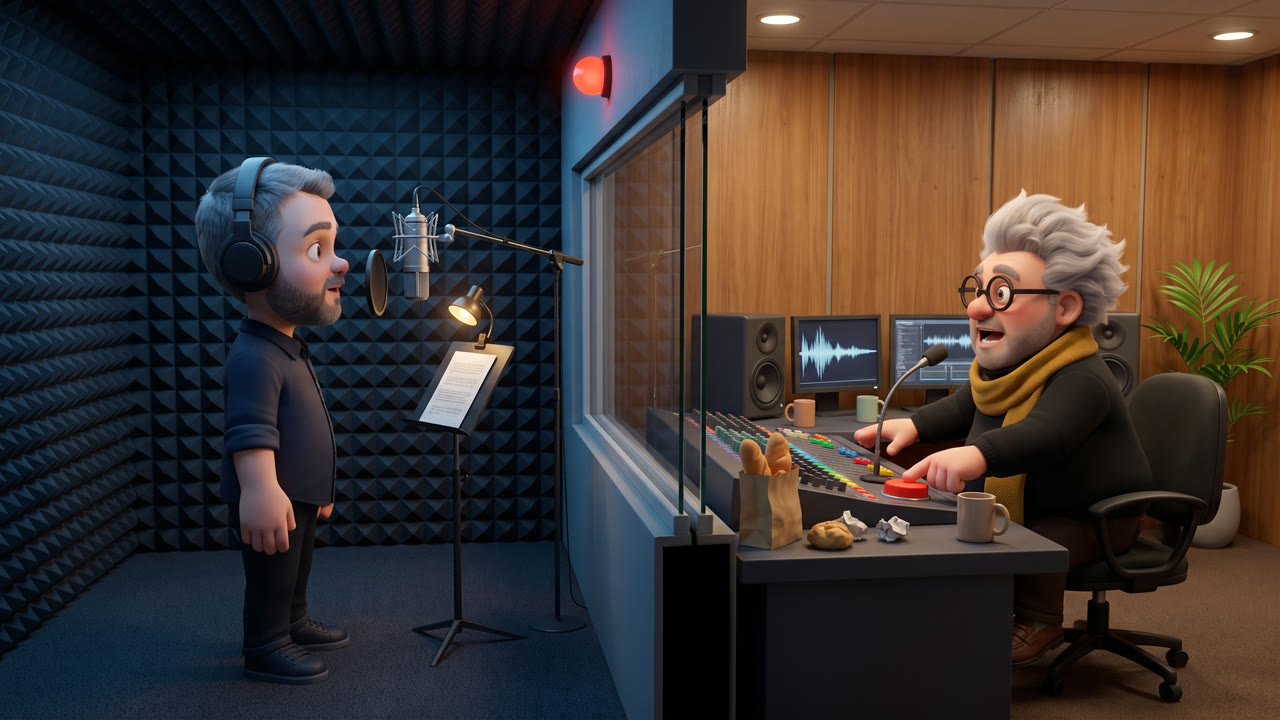
Anyone who does voice work knows this session. One sentence, one booth, and behind the glass someone with ideas. More bread roll. Proud, but sad. Sexy. Pirate. In the end, the choice falls on take one.
I have stood in front of microphones long enough to know this session. So I wanted to show it once, with myself as a 3D character and my own voice as a clone. The sentence is “Frische Brötchen. Jeden Morgen. Bäckerei Krume.” – fresh bread rolls, every morning, Krume Bakery. Nothing more is needed.
Sound first
The script went through three drafts. The first was a monologue on the meaning of a voice, the second a string of sketches about the craft. Both were too clever. The third has a single sentence and a director who takes it apart. That one carries the film.
The sound came before the picture: my clone for the voice actor, a library voice with a talkback filter for Benno, the director. This track is the timeline. Every cut follows it.
Two rooms, one pane of glass
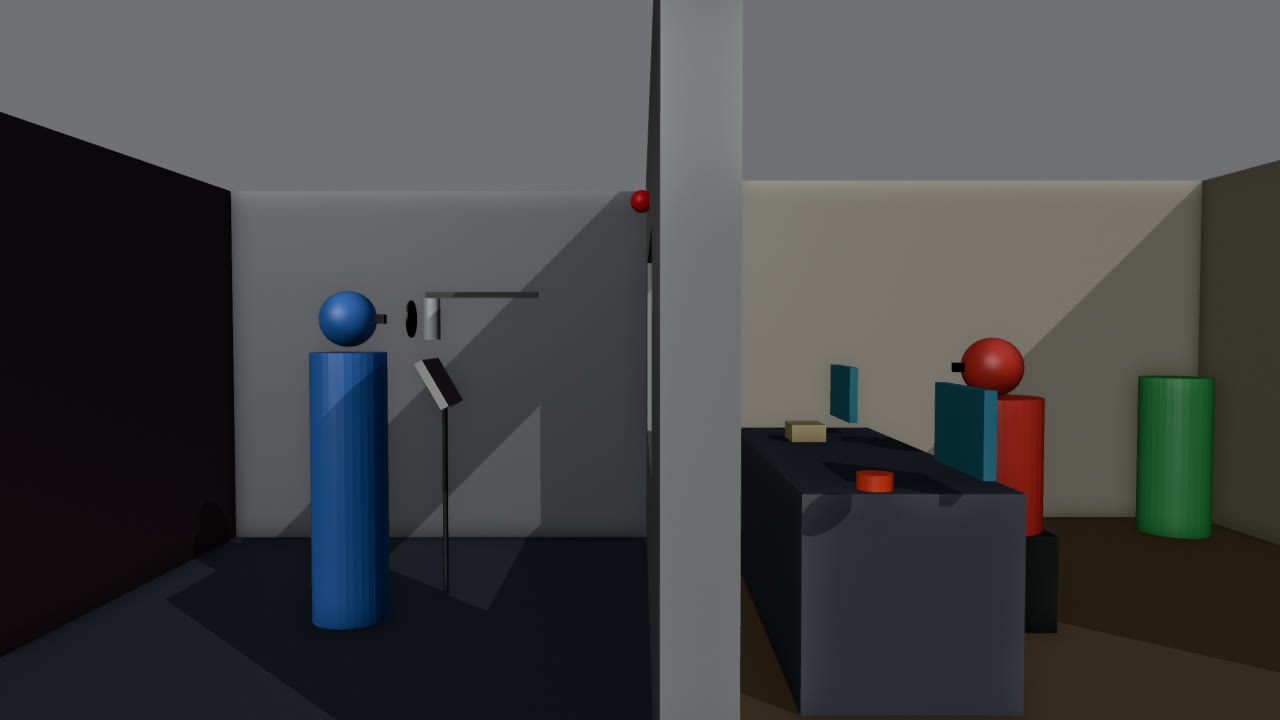
Booth on the left, control room on the right, glass in between. The space was built first as a grey 3D blocking with five cameras. Then came the character sheets, and from them the start frames. The scene is cut as shot and reverse shot. In each shot only one character speaks.
What the machine couldn’t do
The video model received the matching audio track with every start frame. The first cut looked good and sounded good. It still didn’t fit: the lips were running alongside the voice.
Measuring showed why. The model doesn’t take an audio reference as a fixed track. It speaks the line again itself, in my timbre but at its own pace. Sentence endings were off by up to one and a half seconds. In one shot it had even spoken different syllables.
Regenerating would not have changed that. So I fixed the lips instead. A second model replaces only the mouth in each clip and aligns it to my real track. Gestures, looks and camera stay exactly as approved. In the first test clip, the match between mouth and sound rose from 0.11 to 0.49. The remaining offset was two frames.
What it cost
944 Higgsfield credits for images and clips, about 40 euros. Fixing the lips cost about 16 euros. Voices and sound effects came to less than a euro. The directing assistant ran on my Claude subscription: 293 model calls, 152 million tokens, a share of less than a euro. Billed via the API, it would have been about 36 euros. I was on my turn for one hour and sixteen minutes, just under two hours including viewing time.
What I take away
When the sound is fixed first, lip sync belongs in the plan from the start. A model that creates picture and sound together sticks to its own sound.
And the film is right. The machine delivers twenty versions of a sentence in minutes. Only someone who understands the sentence knows which one is meant. Most of the time it’s take one.
What this means for an organization
Strategy. Knowing the limits of a model is an asset, and it ages fast. Here the video model re-spoke my sentence at its own pace; sentence endings were off by up to a second and a half. Whoever knows that in advance plans lip sync in from the start. Whoever does not, plans wrong.
Role. Someone has to measure before regenerating. Only the measurement showed the cause. Regenerating would have changed nothing; fixing the lips did: 18 of 21 clips, about €16.
Process. What was approved stays. Gestures, looks and camera had been signed off; only the mouth was replaced. A process that regenerates everything at every error pays several times over and loses what was already good.
What stays human. Understanding what is meant. The machine delivers twenty variants of a sentence in minutes. Which one is meant, only someone who understands the sentence knows. Usually it is take one.