
The idea
It started as a Halloween episode: a ghost train at a small English funfair whose ghosts are on the payroll. The owner wants to replace them with animatronics. The first animatic held up until the robot’s first test. After that it went flat.
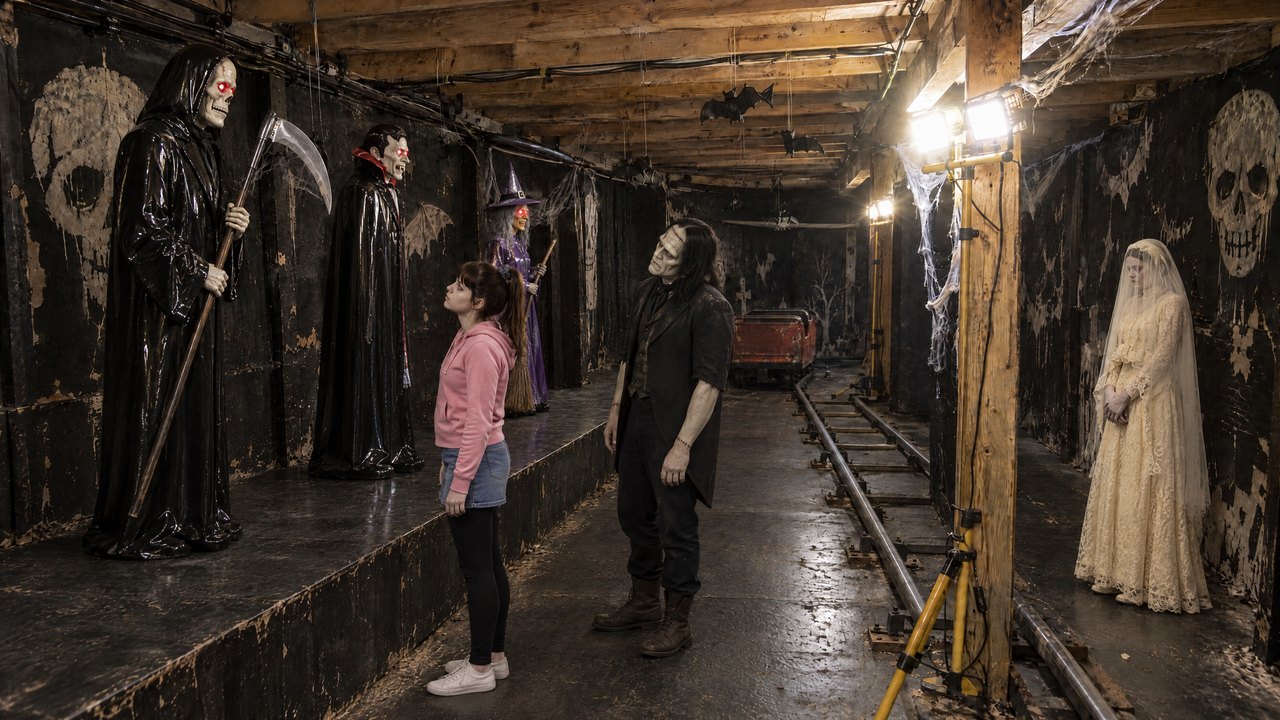
So I rebuilt it. The boss went, and so did the supporting cast. What remained is a staff of three: a monster who has been frightening people since 1818, a young woman who learned scaring by watching, and a bride who never says a word. Then come three animatronics, all with the same scream.
The staff’s objections are the objections to AI. Nobody in the film says “AI”. Nobody says “ghost”. The joke comes from the dry tone of an office mockumentary. Four script versions in one day, until the metaphor held.
A scene is one scene
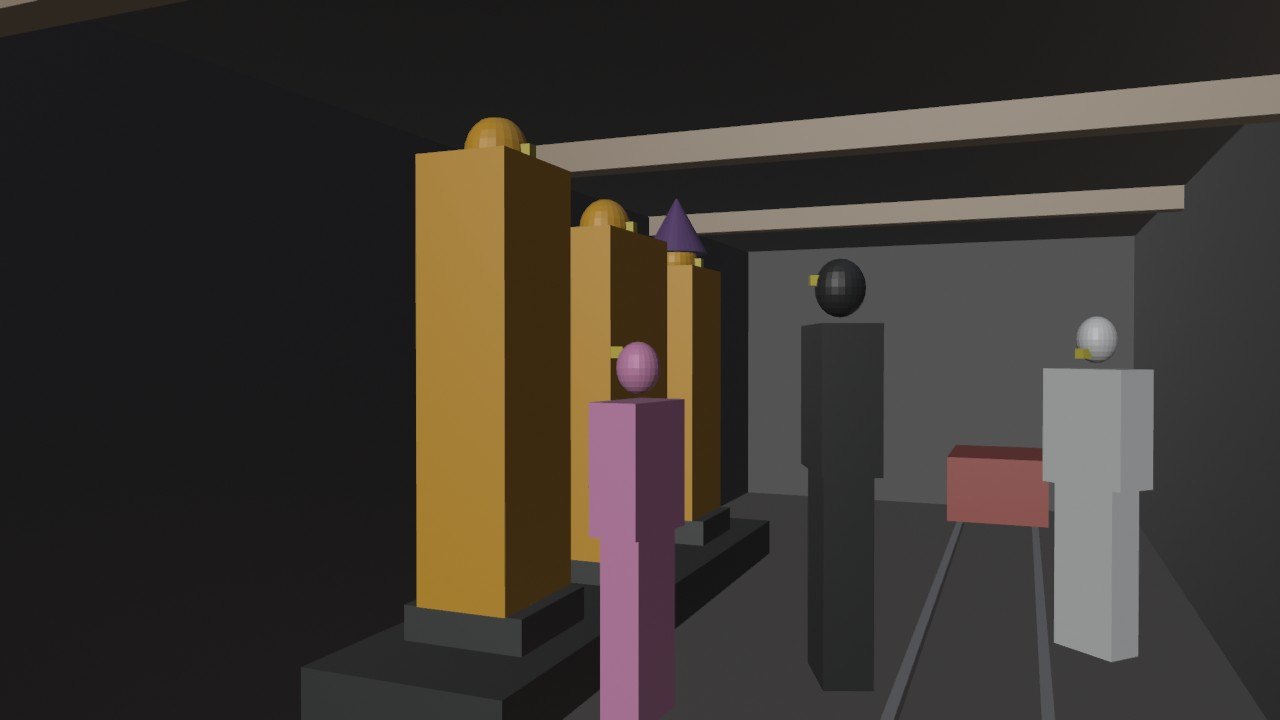
The first set of images looked good and still didn’t add up. At one point the grim reaper stood there twice, the robots were sometimes on the track and sometimes against the wall, and the bride jumped across the room between two shots. Every image had been invented from scratch.
The fix was a floor plan before any image: a straight corridor, the track on the right, a platform on the left, fixed positions for every character and fixed camera sides per scene. After that, every continuous scene came from a single master frame. Only what changes gets changed. Closer shots are crops of it. So the bride stands where she stood before.
What the machine couldn’t do
The video model moves everything that looks like a character. The robots bent at the hip, the witch took a step, the grim reaper started walking in the background like a person. Two attempts with very mechanical directions changed little. It isn’t a prompt problem. The model only knows puppets as people.
The fix came from the director’s chair: the robots don’t move at all. The model got them as switched-off shop-window dummies, rigid. The scare happens in post, only through the eyes and the sound. The LED eyes are off and flare hard red at the scare. Add a servo clunk and a canned scream from a small loudspeaker, the same file for all three.
Only then did they look like robots. Little movement, a cheap signal, always the same. That is also the core of the film.
The sound
The units speak with an assistant voice from the ElevenLabs library: “Hi! I’m here to help!” Voice and scream run through a small loudspeaker and the reverb of the corridor. Their level follows the rattle of the cart. That puts them in the same room as everything else.
The clips bring their own room tone, and it breaks at every cut. So each shot got a short crossfade, and a continuous room tone runs under the interviews. An audience laugh the model had put at the end of one clip is gone.
What it cost
554 Higgsfield credits for character sheets, sets, start frames and 30 clips, about 23 euros. Voice and sound effects came to less than one euro. The directing assistant ran on my Claude subscription: 549 model calls, 284 million tokens, about two euros as a share. Billed through the API, it would have been about 75 euros. I was on my turn for two hours and 29 minutes, just under four hours with viewing time.
About 40 percent of the credits are not in the film: images from the first three script versions, images from before the floor plan, clips with robots that moved too much.
What I take away
Space first, then the image. Without a floor plan, the model reinvents the room in every image. And a scene comes from one image, not from ten.
What a machine can’t do can often be left out rather than forced. The robots became believable once they were allowed to do less.
What this means for an organization
Strategy. The question in the film is the same as in any organization: what should the machine take over, and what not? The units scare reliably, simultaneously and always the same way. That is exactly why they scare nobody. The answer lies in the purpose, not in the tool.
Role. Someone has to define the space before the machine starts. Without a floor plan, the model reinvented the scene in every image. Whoever sets the frame saves rework.
Process. Derived, not regenerated. Every scene came from one master frame, and only what changed was changed. A tendency of the machine that shows up twice is not paid for a third time. That is when the method changes.
With the human. The judgment of when something is funny. The timing of the cut, the small flinch instead of the big reaction, “Holy shit.” as the last line. The machine delivered thirty clips. Which moment carries was my call.