
Radio taught me how easily you can be misunderstood. I was the test case.
In my early years on the air I badly wanted to be funny. I was convinced that was exactly what came across the moment the mic went live. I listened back to myself and thought: easygoing guy, good show.
Then the research came in. Audience tracking. Listeners were asked how they saw me.
The result, roughly and without mercy: very good scores for “informative.” Lousy scores for “humorous.”
For the station, that was great. For me, it was almost a small crisis. I had meant something completely different.
The lesson has stuck with me ever since.
What counts isn’t what we send. It’s what arrives.
That is why I trust tracking more than my gut: satisfaction surveys, audience studies, or the simplest form of all, honestly asking the other person how they understood it.
And professional communication includes the uncomfortable second step: taking that feedback seriously. Even when it doesn’t match how you see yourself. Unless we want to be misunderstood.
None of this is new. What’s new is that it can’t be overlooked.
That the receiver has a say in what was said is no discovery of our time. Back in 1981, the German communication psychologist Friedemann Schulz von Thun described how every message can be heard with four different ears. Every introductory PR textbook covers stakeholder groups. The knowledge is old.
What has changed is how visible it is. Today we communicate across so many channels with such finely segmented groups that differences in perception no longer vanish in the noise. The classic case from every PR textbook: a message meant internally as a fresh start reads, on the outside, as an announcement of layoffs. “Here’s a new product” turns into a political issue. The message itself is rarely to blame. Timing, mood and context are.
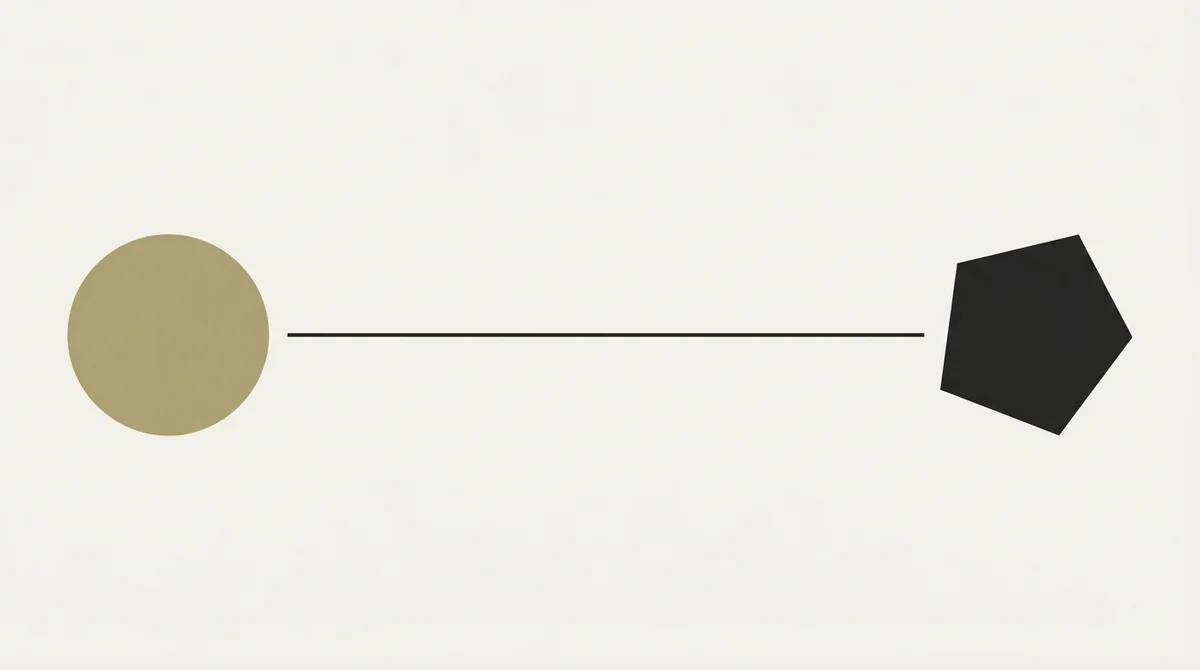
With AI, the same question comes up. A thousand times over.
We can now scale communication massively, at a speed that didn’t exist before. In any tone. In any format. For any stakeholder group.
Except that anyone who can’t reliably steer even one voice (my own was lesson enough for me back then) certainly won’t steer a thousand variants. Scale amplifies whatever is there. The blur included.
Early research on AI communication points the same way, with all the caution young research deserves: AI-generated content becomes measurably more alike. And as soon as people suspect AI behind a brand, its perceived authenticity drops. Put those together and it means this: if you scale without a clear foundation, people won’t see you more clearly. Just louder, and more interchangeable.
Communication doesn’t end with sending. That is where it begins. When did you last measure what actually gets through?