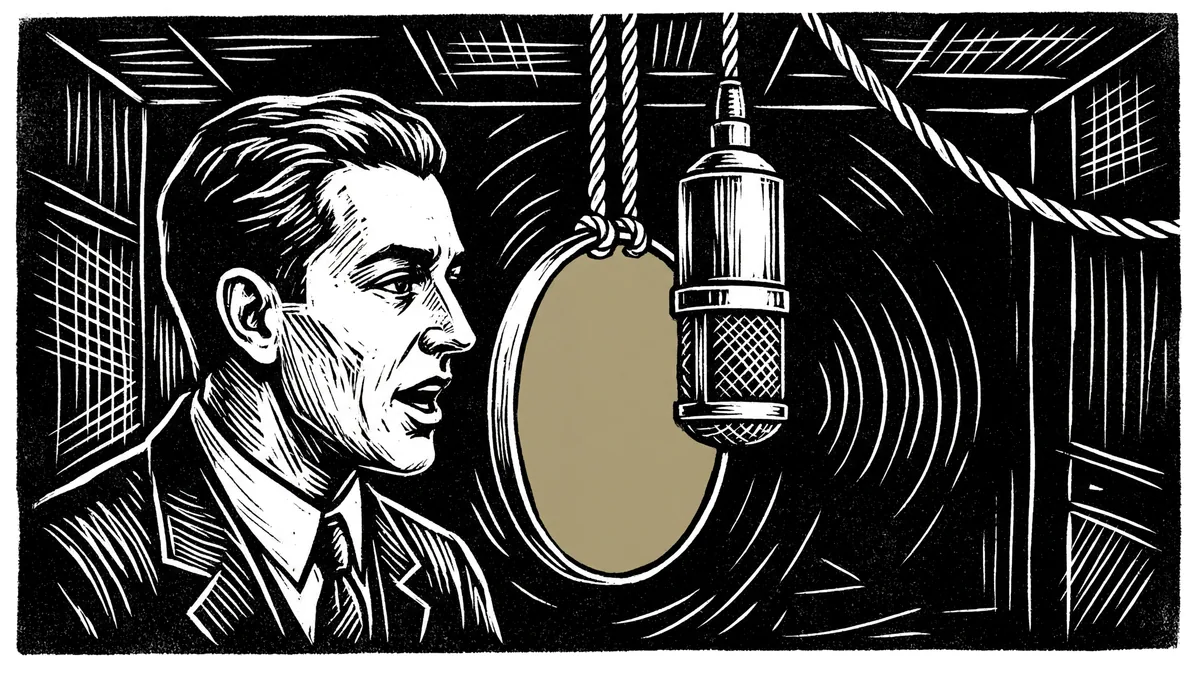
There’s a conflict I can’t let go of right now. Voice actors are rising up against Netflix. Voice recordings are being fed to AI. Without proper contracts. Without compensation. Voices recorded for one production end up as training material in a machine that could later replace those same voices. A livelihood inside an algorithm. Without negotiation.
On a human level, I understand the outrage. There’s a life’s work here. There’s voice, in the literal sense and the figurative one. There are people who spent decades refining their craft and suddenly find that craft migrating into a machine nobody asked them about.
That deserves a response. And it deserves contracts that govern the process. On that, I’m on the voice actors’ side.
But.
I was a voice actor myself for over twenty years. And I have to ask a second question. One that barely comes up in the current debate.
How real was the before, anyway?
Dubbing sessions. Corporate films. Radio commercials. How much of what came out of that was really human, and how much had long been pure function?
I say this from experience. My favorite genre was always mood pieces. Ideally with some back-and-forth. With a producer who’d say: “Try that a touch drier.” “Go in, but hold back.” “Leave the pause, it’s half the message.” Something happened there. My voice shaped the emotion of the whole piece. That wasn’t reeling something off. It was a dialogue that produced a result that wouldn’t have existed without it.
But that wasn’t the everyday. The everyday was often something else. The voice actor as a pure talking machine. Deliver a tone. Fulfill a certain feel. Be modeling clay for an agency, a studio boss, a sound engineer, all of whom had their own idea of how it had to sound in the end. My contribution: hitting record with a reasonably specific timbre.
Who misses that process emotionally? You miss the money. Of course. But the process itself, reeling off a tone with no variation, delivering an interchangeable feel? Looked at soberly, no one misses that.
And that’s why you have to draw a line here, too. Criticism of Netflix is justified where contracts are missing. But criticism of AI as such turns dishonest when it defends a picture that had little to do with reality. When it pretends that what AI replaces was pure art. Much of it was not art. Much of it was function long before.
I’m not lumping everything together
Advertising is not dubbing. There’s a reason German tax authorities don’t classify advertising work as art. That isn’t contempt. It’s a classification. And it has its reasons.
Dubbing is a different craft. In Germany, nearly every foreign film and series is dubbed, and I wouldn’t want to lose the great voice actors who sometimes got more out of an actor than the original did. When you hear a German voice give a character a depth that wasn’t even there in the English original, that isn’t modeling clay. That’s an act of translation with value of its own. Outrage is fair when that gets replaced without a second thought.
Yet even this legitimate fight misses something crucial. The real movement is happening on another level.
The movement nobody wants to name
Media is fragmenting. Content keeps multiplying. Its worth keeps falling. And with it, everything attached to that content. The fee. The attention. The recognition. The chance to make a living from the craft.
It’s a movement that hurts. Of course it hurts. It’s the experience that something you trained for over years, something you stood for, something you refined, is all losing value. You didn’t get worse. The whole logic underneath it changed.
And into that situation comes AI. It isn’t the cause. It’s the accelerator. It makes visible what was already happening. But it’s perceived as the cause. Because it’s the most visible symptom. Because it’s easier to grasp than the slow erosion of an entire media system.
Anyone demonstrating against AI is really demonstrating against a shift that is much bigger and has been running much longer. But AI has a face. The shift doesn’t. So people protest against the face.
Where the protest turns dangerous
I don’t want to be misunderstood. Protest is legitimate. Contracts matter. Standards need to be set. Where companies use voices without consent, that belongs in complaints, in court, in regulation.
But at some point the protest tips into a logic that makes me suspicious. The logic goes: together we can change this.
And here, uncomfortable as it is, I have to be honest.
We can’t.
We can win individual contracts. We can push through individual standards. We can defend human involvement on individual productions. That’s worth a lot. That isn’t nothing.
But we can’t stop the underlying movement. It’s bigger than us. It’s bigger than Netflix. It’s the structural shift of an entire media system into a form where volume gets cheap and attention becomes the scarce resource. That shift has been underway for decades. AI isn’t where it started. AI is where it leads.
Whoever doesn’t say this out loud is selling hope that can’t be redeemed. And strictly speaking, that’s a second kind of devaluation. This time of political agency, on top of the work. You promise people that collective action will reverse a movement that can’t be reversed collectively. It’s well meant. But it’s also a way of glossing things over.
What remains
What remains is harder. The question remains: how do I position myself when the old logic no longer holds? Where do I find value that doesn’t lie in volume? Where does the thing come from that can’t be scaled?
I think that’s the real task. Fighting AI isn’t it. Figuring out where people are irreplaceable is. And then showing it.
And that’s more work than holding a protest sign. It means sharpening your own craft until it’s no longer interchangeable. It means not consoling yourself with having been needed once, and finding answers to what you’re needed for today. And it means letting go of the illusion that the world will stand still for you.
That’s a bitter message. But I believe it’s the only one that holds.
My relationship with my old profession
I haven’t given up voice work. But I’ve come to understand it differently.
Today I work in a hybrid way. That means I no longer voice everything myself. Most of it is done by my machine, an AI clone of my own voice. It delivers what used to be the bread-and-butter work: reeling off a tone at scale. That works. It works surprisingly well, in fact.
What the machine can’t do, I do.
And here’s the point I only understood after many projects. My voice has a value that doesn’t sit in the finished audio file. It has value as control for other voices. In speech-to-speech mode, my recording doesn’t become the end product. It becomes a direction note that carries emotion, pace, the placement of pauses and the finest intonation over to another voice. My vocal DNA is no longer the sound that comes out at the end. It’s the score the machine uses to make the other voice sing.
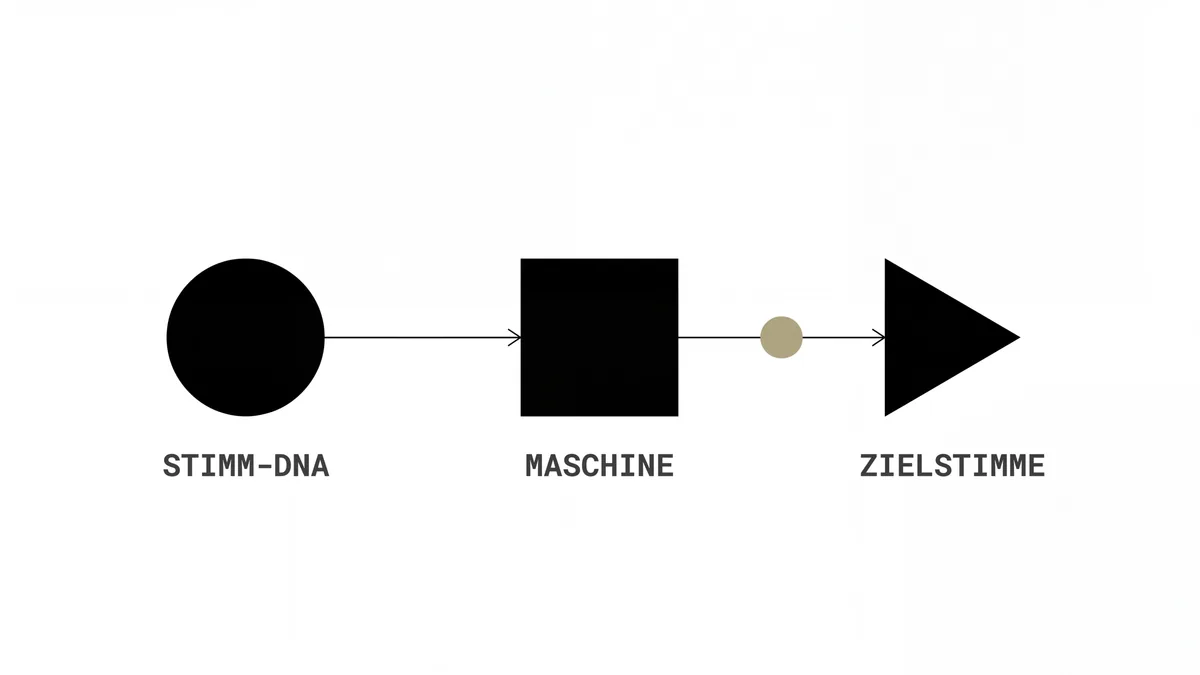
That’s something I couldn’t have predicted two years ago. My profession didn’t shrink. It moved. From delivering a tone to conducting one. From voice actor to director of a machine that in turn produces other voices.
That also changes what I can offer at all. I used to sell time at the mic. Today it’s a combination of vocal DNA, direction and a machine that scales both. What you get now is more than what my mouth delivers. It’s a system in which my mouth does the steering and the machine does the multiplying.
That isn’t resignation. It’s a reshuffling, and for me it was good news. It showed me that the value of a trained voice actor doesn’t lie in the number of words spoken. It lies in a depth that suddenly, in the context of AI, takes on a whole new function.
I think everyone working in a media profession will have to go through a similar reshuffling in the coming years. The question isn’t so much what to let go of. It’s where am I suddenly more valuable than I thought? Where does my experience make something possible that the machine can’t manage alone, and a beginner can’t either?
That’s exactly where the answer lies. With the machine, rather than against it, in a position only a person with depth can take.
The two movements we have to separate
Two things are getting mixed up in the current debate. And that hurts us.
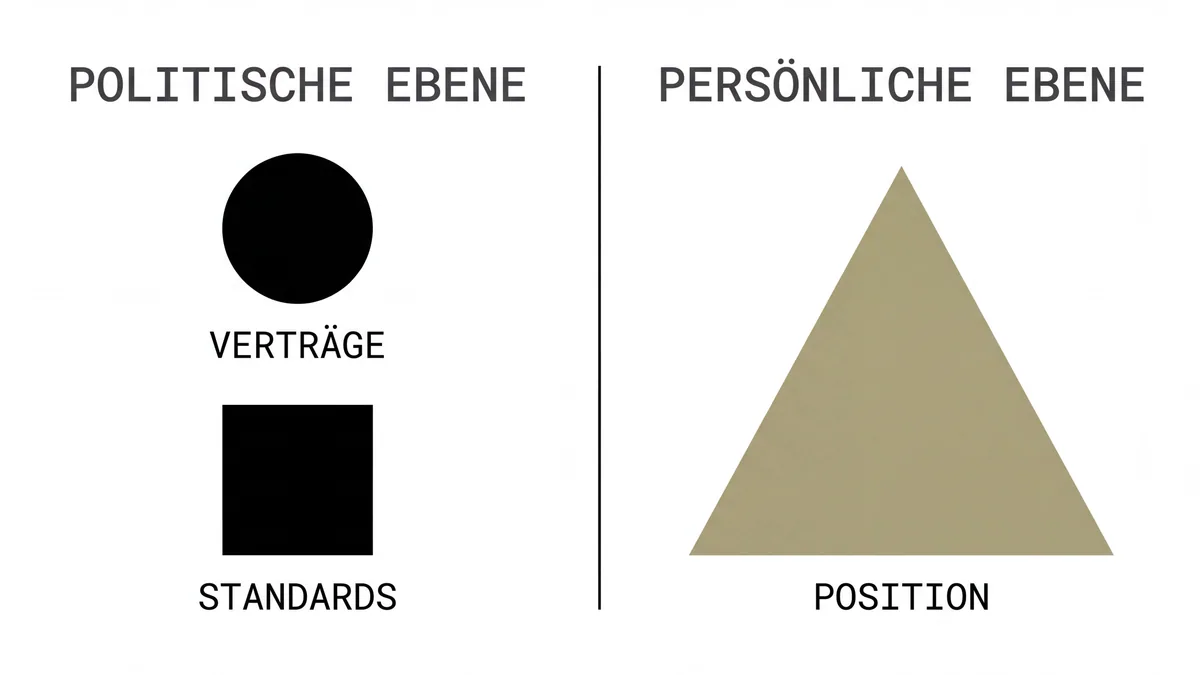
One is the legitimate demand for fair contracts, clean consent, transparent use of data. Here you can fight. Here you have to fight. Here success is possible, and it matters.
The other is grief over a world in which a certain profession had a certain value, and in which that value can no longer be taken for granted. That grief is human. It’s justified. But protest can’t resolve it. Only a change in your own position can. Finding what is irreplaceable in what you do, and being willing to hand over everything else.
Whoever mixes up these two movements fights the wrong fight. He tries to heal grief with political means. That doesn’t work. Grief needs other tools.
In closing
We can’t stop the structural movement. We can regulate individual processes. That matters, and it isn’t little. But anyone who gives the impression that together we’ll bring back the old world is lying to themselves and to others.
What remains is your own work. Sharpening what is irreplaceable. And sometimes realizing that the irreplaceable takes a different shape than you expected. That the voice you sold for decades is suddenly in demand as direction, no longer as sound. That the craft lives on, just at a different point in the value chain.
Not through protest. Through work.
And sometimes through the surprising gift of finding your own experience needed in a context where you never would have expected it.